

The Tawang Monastery in the eastern Himalayas is one such spiritual treasure that is remote yet full of history, culture and scenic beauty. To the WanderUnheard audience, the article will discuss the monastery beyond the normal travel blurbs: we are going to talk about how it comes to be there, how it was built, its cultural value, how it is being traveled to, why it is an off-the-map Himalayan experience despite the increased awareness.
1. Location & Setting
The Tawang Monastery, located in the Tawang valley of Arunachal Pradesh, the northeastern state of India, is situated at an elevation of approximately 3,000 m (10,000 ft) and is not very far away as the border area of Tibet and Bhutan.
Its mountainous terrain, high-altitude location, as well as relative remoteness are the reasons of both the feeling of isolation and the deep sense of spiritual tranquility.
2. Historical Origins
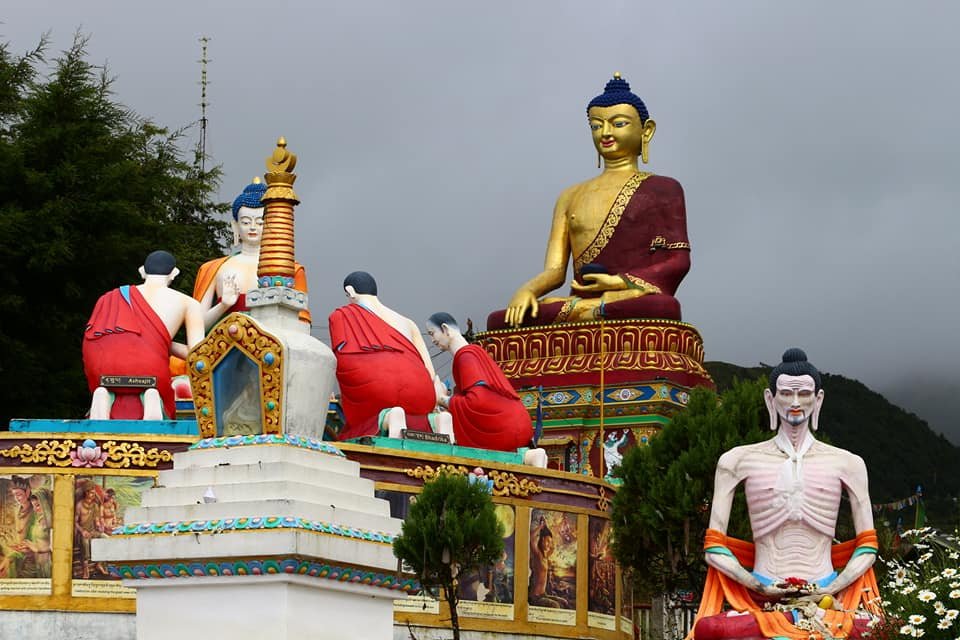
In 168081, the lama Merak Lama Lodre Gyatso (also spelled Mera Lama) was commissioned by the 5th Ngawang Lobsang Gyatso, the 5 th Dalai Lama, to establish the monastery.
There is a well-known legend as to the name of Tawang (Ta = horse, wang = chosen) about the lama having a horse that wandered to the place indicating the divine decision on the place.
The monastery has continued over the centuries to be a centre of the Gelug school of Tibetan Buddhism, still linked with monastic institutions in Tibet (in particular the Drepung Monastery in Lhasa).
3. Architecture & Layout
The architectural ensemble of Tawang Monastery is as striking as its location. Some highlights:
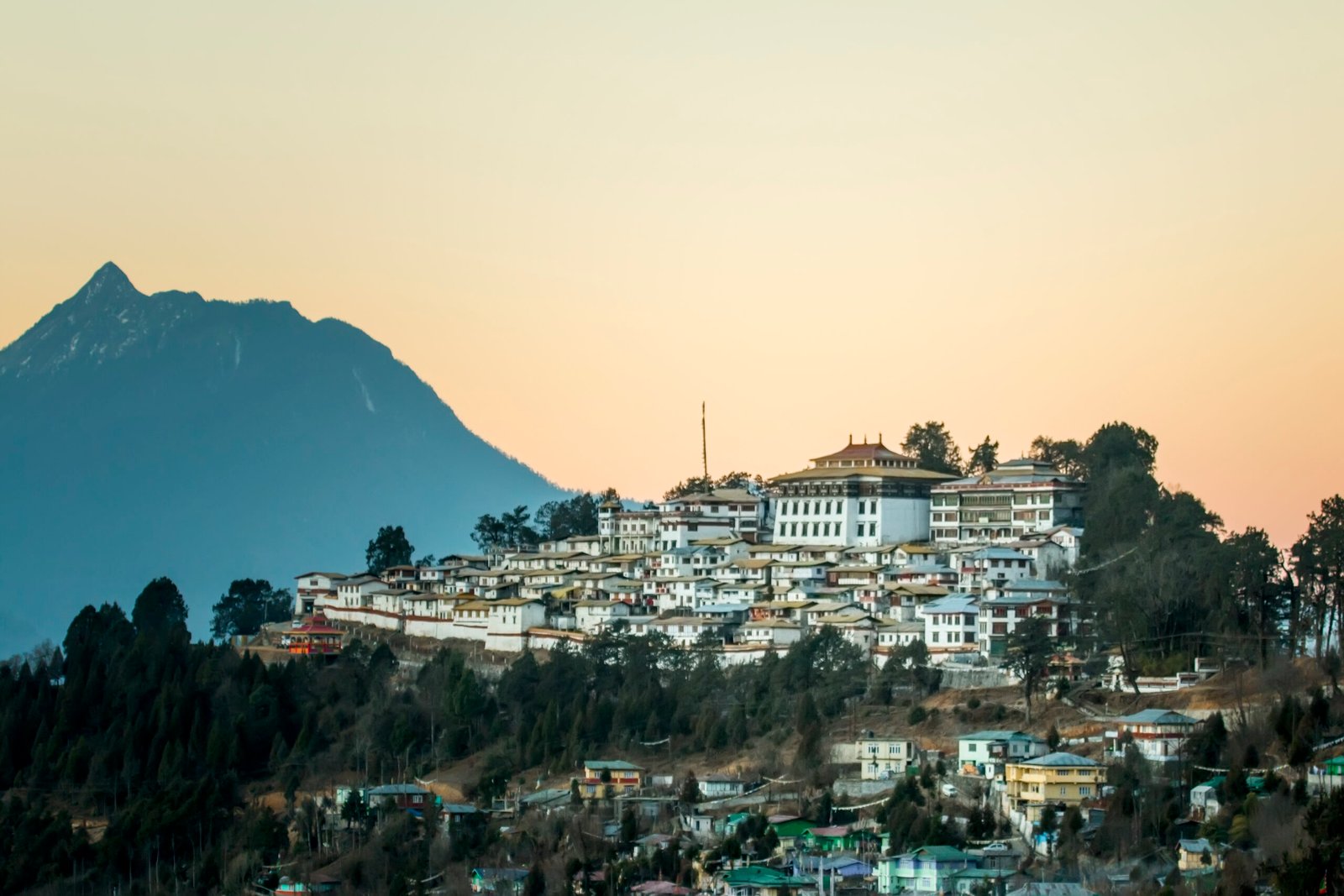
- The complex is three-storeyed, with around 65 residential buildings inside its compound wall.
- The monastery is enclosed by a long compound wall and includes prayer halls, schools, living quarters for monks, a library of ancient Buddhist scriptures, and a museum.
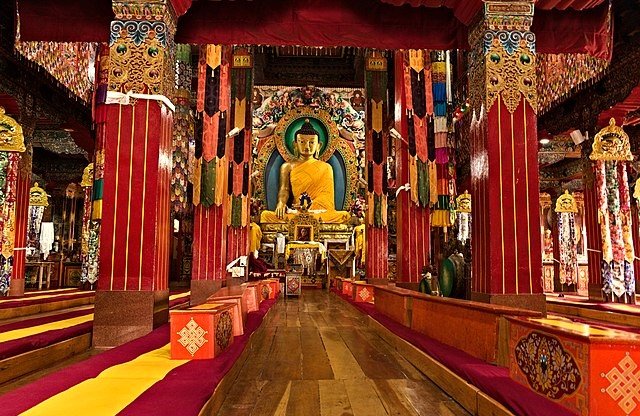
- Inside, you’ll find elaborate thangka paintings, wall-murals, a large statue of Buddha and other ritual artefacts.
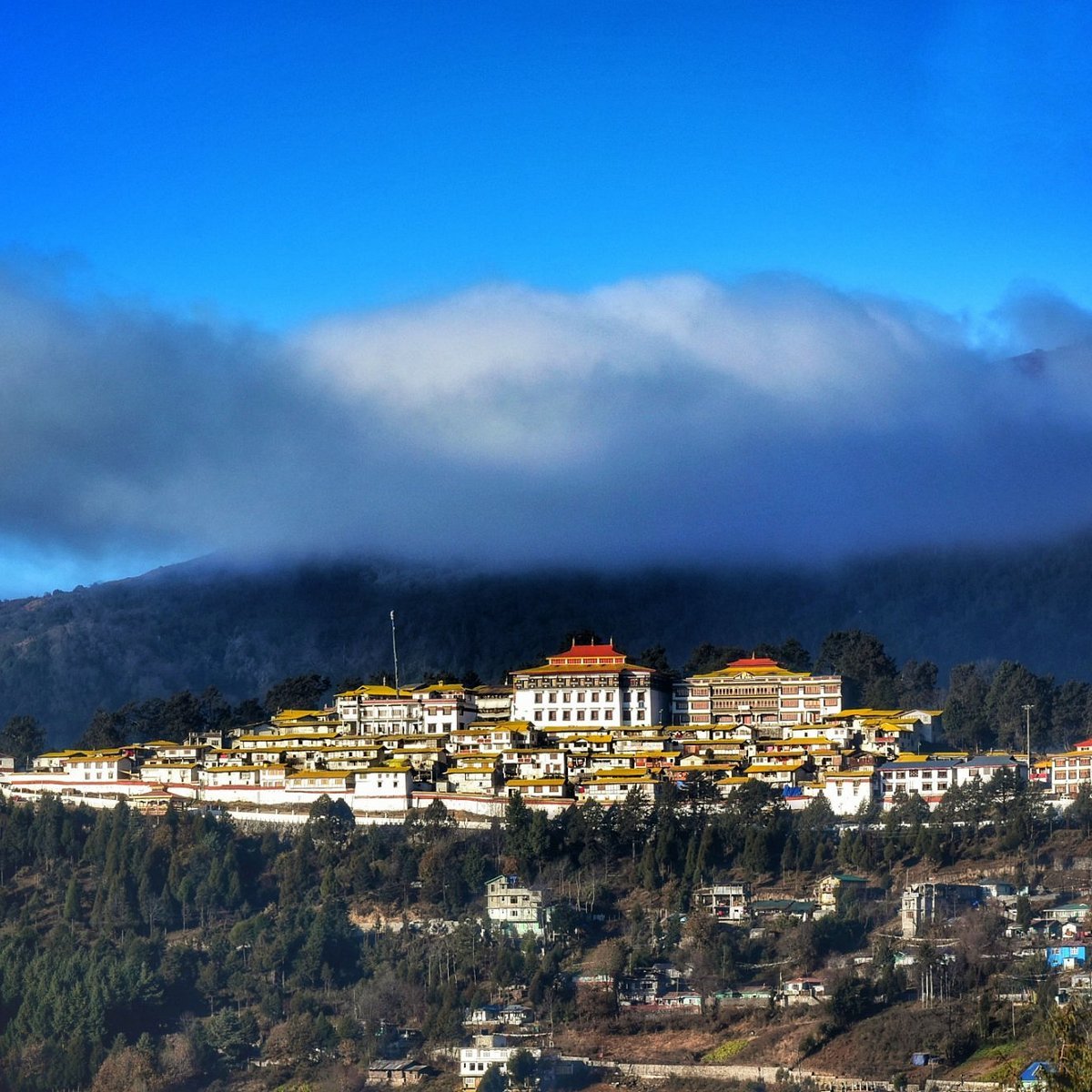
- The structure sits on a spur of a hill, with steep ravines on two sides, which gives it a fortress-like aspect.
Altogether, the building creates the impression of a fortified spiritual citadel, erected high above the valley, which fits perfectly in the Himalayan matchless environment.
4. Cultural & Religious Significance
- As one of India’s largest Buddhist monasteries, Tawang has been a major spiritual hub of Mahayana Buddhism in the region.
- It continues to be an active monastic institution: monks live, learn and perform rituals here, so it’s not just a tourist attraction but a living tradition.
- The monastery plays a vital role in the identity of the local Monpa community (the dominant tribe in the region) and of the Himalayan Buddhist world.
- Festivals such as Torgya (held in January according to the Buddhist calendar) take place in and around Tawang, offering colourful masked dances, ritual burning of effigies and vivid celebrations.
5. Why “Off the Map” — Yet Worth Visiting
Despite being one of the most significant monasteries in India, Tawang Monastery retains an air of “off-the-map” solitude for a number of reasons:
- Remote location: Transport corridors remain challenging (though steadily improving) with high mountain passes and weather-sensitive roads.
- Altitude and terrain: The high elevation and terrain make access slower than typical tourist resorts.
- Border-region sensitivity: Being close to the Line of Actual Control (India–China border) and in a region with special permits for visitors adds to its remote feel.
- Less commercialisation: Compared to mainstream Himalayan tourist spots, the pace here is gentle, spirituality unhurried, and local life less altered by mass tourism.
For the intrepid traveller or spiritual seeker, that sense of remoteness adds to the charm: you’re not just seeing an ancient site — you’re entering a living monastery in the high Himalayas, with all the peace, cold air, prayer flags, chanting monks and panoramic vistas that such a place promises.
6. Travel Logistics & Practicalities
When to go: The best months are March to October when roads are open and weather is moderate. Winter months can bring heavy snow and reduced access.
Access & permits: From Assam (for example Tezpur) one can drive into Tawang via mountainous roads. Visitors should check for required permits (Inner Line Permit) in Arunachal Pradesh.
Altitude note: At ~3,000 m there is a need for acclimatisation — allow a day or two to adjust, carry warm clothing and stay hydrated.
On-site behaviour: Since this is a living monastery, respectful behaviour is essential — dress modestly, ask permission before photographing monks or ritual spaces, keep noise minimal.
Stay & local experience: Tawang town offers lodging ranging from simple guesthouses to more comfortable hotels. Explore the town, walk around the monastery in early morning, experience local Monpa cuisine and get in touch with Himalayan culture.
7. Photo & Experience Highlights
- Arrive early in the morning when the first light hits the monastery façade and the valley lies under mist.
- Inside the prayer hall, witness chanting sessions (if accessible) — a powerful immersive cultural moment.
- Walk around the gaily coloured prayer-flags that flutter with Himalayan winds — a quiet symbol of these high places.
- Explore vantage points around the monastery for expansive mountain-valley vistas: the combination of architecture + wild Himalayas is what makes this a “Himalayan gem”.
- Visit during a festival like Torgya if your timing allows — you’ll witness masked monks, ritual dances, local townsfolk in festive mood.
FAQ – Frequently Asked Questions
Q1: Where is Tawang Monastery located?
A: The monastery is located in Tawang district of Arunachal Pradesh in north‐eastern India, at an elevation of about 3,000 m (10,000 ft) overlooking the Tawang Valley.
Q2: When was it founded and by whom?
A: It was founded in 1680–81 by Merak (Mera) Lama Lodre Gyatso in accordance with the wishes of the 5th Dalai Lama, Ngawang Lobsang Gyatso.
Q3: Which Buddhist school does the monastery belong to?
A: The monastery belongs to the Gelug (Yellow Hat) school of Tibetan Buddhism, and has historical links with the Drepung Monastery in Lhasa.
Q4: Why is the name “Tawang” used and what does it mean?
A: Its name is a combination of Tibetan: “Ta” which means horse and wang means chosen. It is legend that a horse pointed where the monastery was. The complete Tibetan name of the monastery is Gaden Namgyal Lhatse that translates to divine paradise of complete victory.
Q5: What is special about its architecture?
A: The monastery is a three-storey building, 65 residential buildings, a large prayer hall, a library containing centuries-old Buddhist scriptures, and is located in an imposing hill-top position, with ravines and valleys on all sides.
Q6: When is the best time to visit?
A: March to October is the most favorable season when roads are more guaranteed to be open and the weather is milder. Possibly, winter (December to February) will be characterized by a lot of snow and difficulties in access.
Q7: How accessible is it and are permits required?
A: It is normally reached by road through Assam through mountainous terrain. Since it is a border area, the residents of the Arunachal Pradesh government typically demand an Inner Line Permit (ILP) to the non-residents.
Q8: What should travellers keep in mind?
A: Travellers should allow for acclimatisation (altitude ~3,000 m), carry warm clothing, respect monastic spaces (quiet, modest dress), and plan for slower travel times due to terrain. It’s also wise to check seasonal weather and road conditions.
Conclusion
Tawang Monastery is a stunning destination to end up in, especially to those who are interested in taking a spiritual journey as well as exploring the Himalayan grandeur, cultural mellowing and comparative calmness. It is not a place on the usual vacation road, and so there is a step into the other Himalayas of the visitor, where silence, mountain air and old rhythms are still effective. Tawang Monastery is a good place to put at the top of your list if your next venture with WanderUnheard is an off-beat Himalayan gem.

